Safe cannabis dosage guidelines are not universal because THC and CBD affect every individual differently based on biology, tolerance, product type, and health status.
In this guide, we explain safe cannabis dosage guidelines for THC and CBD beginners, using evidence-based, pharmacist-led principles to help you understand how dosing works safely and responsibly.
This article is designed for patients, pharmacists, pharmacy students, and healthcare professionals seeking medical cannabis dosage guide insights grounded in safety, science, and clinical practice.
Key Takeaways
- There is no single safe cannabis dose for everyone
- THC is psychoactive; CBD is non-intoxicating but biologically active
- The safest approach is “start low, go slow cannabis”
- Dosing depends on product type (edibles, oils, inhalation)
- Cannabis may interact with prescription medications
- Pharmacist guidance improves safety and reduces risks
- Always consider legal differences across states and countries
Understanding Safe Cannabis Dosage Guidelines
What Are Safe Cannabis Dosage Guidelines?
Safe cannabis dosage guidelines explained simply refer to structured approaches used to reduce risks when using THC or CBD products.
These guidelines are not fixed prescriptions but general principles based on clinical evidence and pharmacy practice.
Key factors influencing dosage include:
- THC and CBD concentration
- Individual tolerance and sensitivity
- Age, weight, and metabolism
- Medical conditions
- Drug interactions
- Product type (edible, oil, inhalation)
CannabisPharmacist emphasizes that dosing should always be individualized and ideally guided by a qualified healthcare professional.
Why Cannabis Dosing Is Complex
Unlike many medications, cannabis products vary widely in:
- Potency
- Absorption rate
- Onset time
- Bioavailability
This makes a standardized medical marijuana dosing chart difficult to apply universally.
Why One Dose Does Not Fit All
Cannabis interacts with the endocannabinoid system (ECS), which varies significantly between individuals. This leads to:
- Different psychoactive responses to THC
- Variable therapeutic response to CBD
- Unpredictable onset in edibles
What Is a Safe Cannabis Dose for Beginners?
A common AEO question is:
What is a safe cannabis dose for beginners?
A safe beginner dose typically follows a low-dose THC or CBD introduction strategy, focusing on gradual adjustment rather than immediate effect.
Beginner Safety Principles:
- Start with the lowest available dose
- Wait sufficient time before re-dosing
- Avoid combining with alcohol or sedatives
- Observe effects before increasing dose
For inhalation products, effects appear quickly. For edibles, effects may take significantly longer, increasing overdose risk if re-dosed too early.
How Much Cannabis Should I Take?
There is no universal answer, but clinicians and pharmacists use a structured approach:
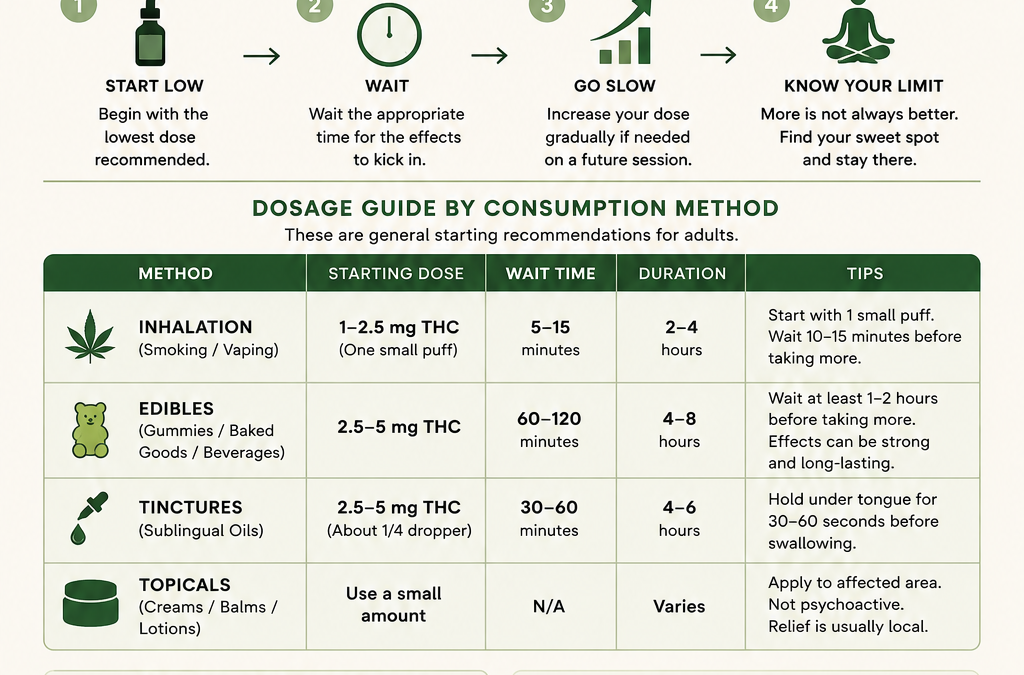
Step-by-Step Safe Dosing Framework
- Start with a low THC or CBD dose
- Wait for full onset (especially edibles)
- Assess effects carefully
- Adjust slowly over time
- Avoid rapid dose escalation
This approach aligns with the widely used principle:
Start low, go slow cannabis
THC Dosage Guidelines
THC (tetrahydrocannabinol) is the main psychoactive compound in cannabis.
THC Effects Depend On:
- Dose size
- Individual sensitivity
- Consumption method
Common THC Effects:
- Euphoria
- Relaxation
- Altered perception
- Impaired coordination (higher doses)
Safety Considerations:
- High doses may cause anxiety or dizziness
- Edibles may lead to delayed overconsumption
- Cognitive impairment is possible
Source placeholder: NIH cannabis pharmacology studies [citation needed]
CBD Dosage Guidelines
CBD (cannabidiol) is non-intoxicating but still pharmacologically active.
Key CBD Characteristics:
- Does not produce a “high”
- May influence sleep, anxiety, and inflammation pathways (based on research context)
- Has variable individual response
CBD Safety Considerations:
- May interact with liver enzymes (CYP450 system)
- Can affect medication metabolism
- Effects depend on consistent use patterns
Source placeholder: NCCIH CBD safety review [citation needed]
Medical Cannabis Dosage Guide
Pharmacists play a critical role in cannabis dosage guidance by:
- Reviewing medication history
- Identifying drug interactions
- Advising safe titration
- Monitoring adverse effects
- Educating patients on product selection
Common Product Types and Dosing Behavior:
|
Product Type |
Onset Time |
Duration |
Risk Level |
|
Inhalation |
Fast |
Short |
Moderate |
|
Oils/Tinctures |
Medium |
Medium |
Moderate |
|
Edibles |
Slow |
Long |
Higher risk of overuse |
Safe THC and CBD Dosage Guidelines for Beginners
A combined THC and CBD approach is often used in clinical cannabis settings.
Balanced Dosing Strategy:
- CBD may reduce THC-related anxiety in some cases
- Ratios vary depending on patient response
- Microdosing is sometimes used under supervision
Source placeholder: peer-reviewed cannabinoid ratio studies [citation needed]
Drug Interactions and Safety Risks
Cannabis is not risk-free and may interact with:
- Antidepressants
- Blood thinners
- Sedatives
- Alcohol
- Certain over-the-counter medications
Why Interactions Occur
Cannabis compounds may influence liver enzyme pathways (CYP450 system), affecting how drugs are metabolized.
Common Mistakes in Cannabis Dosing
Many beginners make preventable dosing errors:
- Taking too much THC too early
- Re-dosing edibles before full onset
- Mixing cannabis with alcohol
- Ignoring product potency labels
- Self-adjusting without guidance
Importance of Cannabis Dosage Guidelines
In the United States:
- Cannabis laws vary by state
- Potency limits and labeling differ
- Medical vs recreational access is regulated separately
- Product consistency is not fully standardized nationwide
This makes safe cannabis dosage guidelines explained by professionals essential for reducing harm and improving patient outcomes.
Global Relevance of Cannabis Dosing Education
Worldwide, cannabis regulations differ significantly:
- Some countries allow medical use only
- Others have legalized recreational use
- Many regions still restrict cannabis entirely
This creates a global need for:
- Standardized education
- Pharmacist-led counseling
- Evidence-based dosing frameworks
Why Trust cannabispharmacist?
CannabisPharmacist is built on Expertise, Experience, Authority, and Trust (EEAT):
Pharmacist Expertise
- Clinical understanding of drug mechanisms
- Patient safety-focused counseling
Evidence-Based Education
- Uses peer-reviewed research and regulatory data
Drug Interaction Awareness
- Focus on pharmacokinetics and safety risks
Patient Counseling Focus
- Real-world pharmacy guidance principles
Professional Training
- Cannabis pharmacy education and continuing education pathways
Regulatory Awareness
- Alignment with global and US cannabis safety frameworks
When to Speak With a Cannabis Pharmacist or Healthcare Professional
Consult a professional if:
- You take prescription medications
- You experience side effects
- You are unsure about dosage
- You have chronic health conditions
- You are new to cannabis use
Why Choose cannabispharmacist for Evidence-Based Cannabis Education
CannabisPharmacist provides:
- Pharmacist-led cannabis education
- Clinical safety-focused training
- Evidence-based learning resources
- Professional cannabis pharmacy development
- Continuing education opportunities
Our goal is to support safe, informed, and responsible cannabis use globally.
Advance your knowledge with cannabispharmacist, your trusted source for pharmacist-led cannabis education.
Explore cannabis pharmacy training, clinical safety resources, and professional certification pathways designed for healthcare professionals and learners worldwide.
Learn more, join professional education programs, and access evidence-based cannabis resources at https://cannabispharmacist.org/
FAQs
What is “start low, go slow” in cannabis use?
It means starting with a low dose and increasing slowly to minimize side effects and overconsumption risk.
Is CBD safer than THC?
CBD is non-intoxicating, but both compounds may have side effects and potential drug interactions.
Can cannabis interact with medications?
Yes, cannabis may interact with certain medications through liver enzyme pathways affecting drug metabolism.
Why do cannabis doses vary between people?
Differences in metabolism, tolerance, and product type cause variability in response.
Should I consult a pharmacist before using cannabis?
Yes, especially if you are using other medications or have underlying health conditions.
What is a medical cannabis dosing chart?
It is a structured clinical guide used by professionals to estimate safe starting and adjusted doses.