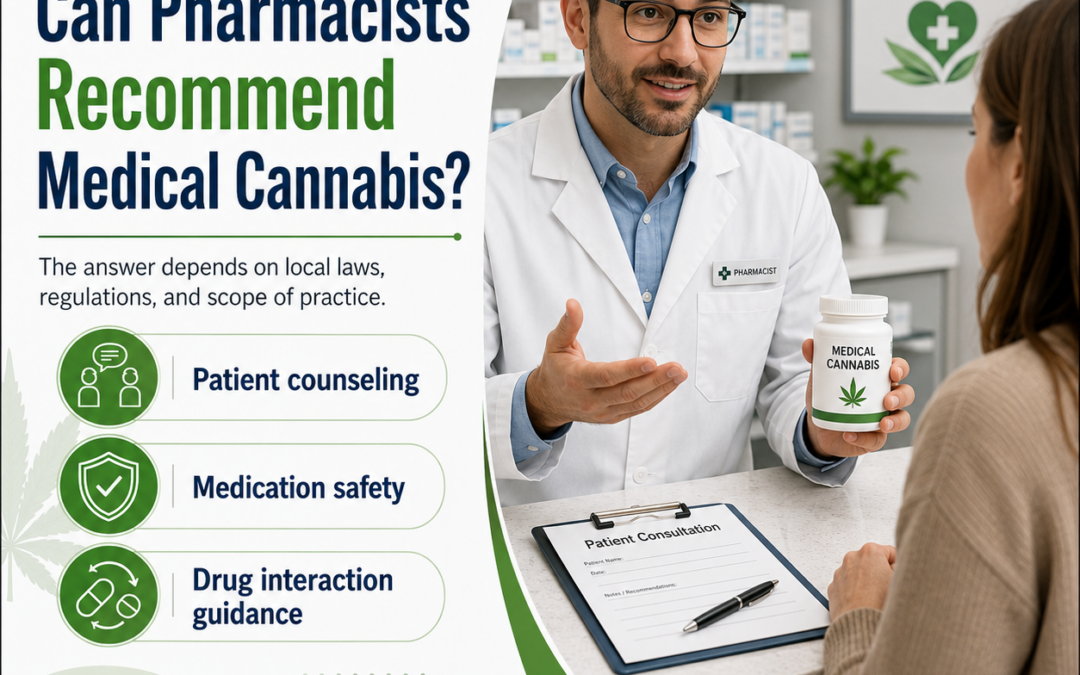
Can pharmacists recommend medical cannabis?
In many settings, pharmacists can provide evidence-based education, review medication interactions, discuss safety concerns, and help patients understand THC, CBD, and cannabis products.
However, whether a pharmacist can formally recommend, certify, prescribe, or dispense medical cannabis depends on local laws, scope of practice, employer policies, and the healthcare setting.
This distinction matters. A pharmacist may be highly qualified to discuss medical cannabis safety, but legal authority differs across U.S. states and countries.
Patients should speak with a pharmacist, physician, or qualified healthcare professional before making medical decisions involving cannabis, THC, CBD, or other cannabinoid products.
Key Takeaways
- Pharmacists can often provide medical cannabis education, medication review, drug interaction screening, and patient counseling.
- A pharmacist’s authority to formally recommend, certify, prescribe, or dispense medical cannabis varies by U.S. state, country, workplace, and scope of practice.
- THC and CBD are not risk-free. Both may cause side effects and may interact with prescription medicines, over-the-counter products, supplements, alcohol, and other substances.
- Product quality, THC/CBD content, labeling accuracy, and regulations can vary widely.
- A safe medical cannabis discussion should include the patient’s medications, health history, work and driving responsibilities, and local legal requirements.
- Pharmacist-led cannabis education helps healthcare professionals provide more informed, evidence-based counseling.
What Does “Recommend Medical Cannabis” Actually Mean?
The phrase “recommend medical cannabis” can mean different things to different people.
A patient may ask whether a pharmacist can recommend cannabis when they actually want help understanding a product, checking for drug interactions, or deciding whether they should speak with a physician.
These roles are related, but they are not identical.
Type of Support | What It Means | May a Pharmacist Help? |
Education | Explaining THC, CBD, product types, risks, and general safety | Often yes |
Medication review | Checking prescription medicines, OTC products, supplements, and possible interaction concerns | Often yes |
Patient counseling | Discussing side effects, impairment, product labels, and safety precautions | Often yes |
Product recommendation | Suggesting a specific product or cannabinoid approach | Depends on jurisdiction and workplace policy |
Medical certification | Confirming that a patient qualifies for a medical cannabis program | Depends on local rules and clinician authority |
Prescribing | Issuing a legal prescription for a cannabis-related medicine | Depends on jurisdiction and product type |
Dispensing | Providing a regulated cannabis product through an authorized setting | Depends on local law and pharmacy model |
Diagnosis | Determining a medical condition or qualifying diagnosis | Usually outside a pharmacist’s role unless separately licensed |
The practical answer is that pharmacists may play a valuable role in medical cannabis care, even when they cannot independently certify a patient or formally recommend a specific product.
Can Pharmacists Recommend Medical Cannabis?
Can pharmacists recommend medical cannabis?
Pharmacists can often provide professional guidance on cannabis safety, medication interactions, side effects, THC and CBD differences, and product-related concerns.
However, formal authority to recommend, prescribe, certify, or dispense medical cannabis is not universal.
In the United States, medical cannabis laws differ by state. Some programs require certification from specific physician or advanced-practice clinician categories. Other jurisdictions may allow pharmacists to participate in counseling, dispensing, education, or care coordination under defined rules.
Outside the United States, legal frameworks vary even more. In some countries, cannabinoid-based medicines may be prescribed through conventional healthcare channels. In others, medical cannabis access is tightly restricted or unavailable.
For this reason, patients and professionals should avoid assuming that a pharmacist’s role is the same in every location.
What Can a Medical Cannabis Pharmacist Do?
A medical cannabis pharmacist is a licensed pharmacy professional with additional knowledge of cannabinoid-based medicines, medication safety, patient counseling, and relevant regulatory issues.
The role may look different across healthcare settings, but common areas of support include the following.
Medication Reconciliation
Patients may not realize that cannabis products belong in a full medication review. A pharmacist can ask about:
- Prescription medications
- Over-the-counter medicines
- Vitamins and supplements
- Herbal products
- Alcohol use
- Nicotine products
- Sleep aids
- Recreational substances
- Previous THC, CBD, or cannabis use
This information matters because cannabis products may affect alertness, sedation, coordination, medication metabolism, and other safety concerns.
Cannabis Pharmacist Consultation
A cannabis pharmacist consultation may help patients understand the difference between education and medical decision-making.
A consultation may include:
- Reviewing current medicines
- Identifying possible drug interaction concerns
- Explaining THC and CBD differences
- Discussing intoxication and impairment
- Reviewing basic product-label information
- Explaining why product quality can vary
- Identifying reasons to speak with a physician or specialist
- Discussing workplace, driving, and caregiving safety
The goal should not be to promote cannabis as a cure-all. The goal is to support informed, safer, patient-centered decisions.
Cannabis Pharmacist Advice for Patients
Good cannabis pharmacist advice should be balanced, clear, and practical.
For example, a pharmacist may explain that:
- THC can impair coordination, reaction time, and judgment.
- CBD generally does not cause the same intoxicating high as THC, but it may still cause side effects and medication interactions.
- Oral products may have delayed effects compared with inhaled products.
- A product label may not answer every safety question.
- Cannabis use should be disclosed during medication reviews.
- Patients should not stop prescribed treatments or alter medicine doses on their own.
Can Pharmacists Counsel on Medical Marijuana?
Yes, pharmacists can often counsel patients about medical marijuana safety, possible drug interactions, product differences, side effects, and impairment risks.
However, counseling is not the same as diagnosing a condition, certifying a patient for a state program, or giving a guaranteed treatment recommendation.
A pharmacist may help a patient ask better questions, such as:
- Does this product contain THC, CBD, or both?
- Could this affect my current medications?
- Could it increase drowsiness or impairment?
- Is it safe for me to drive or work after using it?
- Does my medical history create additional risks?
- Is this product legal and regulated where I live?
- Should I speak with my physician before considering this option?
This is particularly important for patients using multiple medicines or managing chronic health conditions.
Medical Cannabis Safety: Key Issues Pharmacists Should Discuss
Medical cannabis is not risk-free. A responsible conversation should address possible benefits, limitations, side effects, product variability, legal concerns, and the patient’s individual health context.
THC and CBD Are Not the Same
THC and CBD are both cannabinoids, but their effects and risks can differ.
Topic | THC | CBD |
Intoxicating effect | May cause a high and impairment | Does not typically cause the same high |
Common safety concerns | Anxiety, dizziness, impaired coordination, altered perception | Drowsiness, digestive changes, medication interactions |
Driving and work concerns | Can impair reaction time, judgment, and coordination | May affect alertness in some people |
Medication review | Important | Important |
Product variability | Potency, route, and formulation may vary | Purity, THC content, labeling, and formulation may vary |
A patient should not assume that CBD is automatically safe because it is non-intoxicating. Likewise, a patient should not assume that THC is appropriate simply because it is available through a legal cannabis program.
Product Quality and Labeling Can Vary
Cannabis products can differ in:
- THC concentration
- CBD concentration
- Presence of other cannabinoids
- Added ingredients
- Batch consistency
- Contaminant testing
- Product labeling
- Legal classification
- Manufacturing standards
A product’s appearance, online reviews, or marketing language should not be treated as proof of quality or clinical suitability.
Higher-Risk Groups
Extra caution may be needed for:
- Pregnant or breastfeeding individuals
- Adolescents and young adults
- Older adults using multiple medicines
- People with heart or liver conditions
- People with seizure-related conditions
- People with severe anxiety, psychosis, bipolar disorder, or substance use disorder concerns
- People who use sedatives, opioids, anti-seizure medicines, or psychiatric medications
- People who drive, operate machinery, or work in safety-sensitive roles
Cannabis Pharmacist Drug Interactions: Why Medication Review Matters
One of the most important pharmacist roles is identifying potential cannabis pharmacist drug interactions.
THC and CBD may affect the way some medications are processed or experienced. The degree of risk may vary based on the product, dose, route, frequency of use, individual metabolism, liver function, and other medicines or substances involved.
A pharmacist should review the entire medication profile rather than focusing only on cannabis.
Medicines That May Need Extra Review
This is not a complete list, but additional review may be appropriate for patients taking:
- Blood thinners and anticoagulants
- Anti-seizure medicines
- Opioid pain medicines
- Sedatives and sleep medications
- Antidepressants
- Antipsychotics
- Blood pressure medicines
- Diabetes medicines
- Immunosuppressants
- Medicines with narrow therapeutic ranges
- Over-the-counter antihistamines
- Herbal products and supplements
Patients should not stop, reduce, or change prescribed medicines because they want to try THC, CBD, or medical cannabis.
Alcohol and Other Substances Matter Too
Medication safety conversations should include alcohol, supplements, and other substances.
Combining THC, CBD, or cannabis products with alcohol or sedating medicines may increase drowsiness, impaired coordination, or other unwanted effects. The combination may also make it harder for a patient to judge how impaired they are.
A pharmacist can help identify situations where a patient needs extra caution or a physician referral.
Practical Medication Review Checklist
Before discussing medical cannabis, a pharmacist or healthcare professional may ask:
- What prescription medicines do you use?
- Which over-the-counter medicines, vitamins, or supplements do you take?
- Do you use alcohol, nicotine, or other substances?
- Have you used THC, CBD, or cannabis products before?
- What symptom or health concern are you trying to address?
- Do you drive, operate machinery, or work in a safety-sensitive role?
- Do you have heart, liver, seizure-related, or mental health conditions?
- Are you pregnant, breastfeeding, or trying to conceive?
- Have you had anxiety, dizziness, confusion, or unwanted effects from cannabis before?
- Are you receiving care from a physician, specialist, or mental health professional?
Why This Topic Matters in the United States
Medical cannabis access and regulation in the United States are not uniform. Each state may have different rules related to qualifying conditions, patient certification, dispensary access, product categories, possession limits, and healthcare professional participation.
This creates confusion for patients and challenges for healthcare professionals.
Patients Receive Conflicting Information
A patient may hear cannabis advice from:
- Social media
- Friends or family
- Retail staff
- Product advertisements
- Online articles
- Dispensary menus
- Healthcare professionals
These sources do not always provide the same level of evidence or safety review. A pharmacist can help patients separate marketing claims from medication-safety questions.
U.S. Pharmacists Need Cannabis Education
Patients increasingly ask pharmacists about THC, CBD, cannabis edibles, tinctures, possible side effects, drug testing, medication interactions, and product safety.
Pharmacists do not need to promote every cannabis product to provide high-quality care. They can support safer decisions by:
- Reviewing medication profiles
- Identifying interaction risks
- Discussing impairment and driving concerns
- Explaining product variability
- Encouraging clinician communication
- Using evidence-based resources
- Staying current on state-specific requirements
Worldwide Relevance: Medical Cannabis and Pharmacist Guidance
Medical cannabis is also an important global topic. Laws, access pathways, approved products, pharmacist roles, and regulatory standards differ across countries.
A product that is legally available in one country may be restricted, prohibited, or regulated differently elsewhere.
What Global Healthcare Professionals Should Consider
A practical global safety framework includes:
- Review medications and supplements
- Assess side-effect and impairment risk
- Explain product variability
- Consider mental health and chronic disease history
- Check local legal requirements
- Refer patients when needed
- Document counseling according to workplace standards
International Issues Patients Should Understand
Patients should be cautious about:
- Traveling across borders with cannabis products
- Assuming that CBD is legal everywhere
- Workplace drug testing
- THC limits in local laws
- Unregulated online products
- Different product-labeling standards
- Varying requirements for medical access
Common Myths and Mistakes About Pharmacists and Medical Cannabis
Myth: Every Pharmacist Can Certify a Patient for Medical Cannabis
Not necessarily. Certification authority depends on local rules, professional licensing, and the state or country’s medical cannabis framework.
Myth: Pharmacists Cannot Help With Medical Cannabis at All
Pharmacists can often provide useful education, interaction screening, safety counseling, and medication review, even when they cannot formally recommend or certify a patient.
Myth: CBD Does Not Need a Medication Review
CBD may still affect alertness, cause side effects, and interact with other medications. A medication review is still important.
Myth: A Legal Product Is Automatically Safe
Legal availability does not guarantee that a product is appropriate for every patient. Health history, medication use, product composition, and clinical goals still matter.
Mistake: Not Telling a Pharmacist About Cannabis Use
Patients may avoid discussing cannabis because they are worried about judgment. However, pharmacists need accurate information to identify possible interactions and safety concerns.
Mistake: Using Product Marketing as Medical Advice
Testimonials, influencer content, and marketing claims may not provide a complete picture of risk, evidence, or product quality.
When to Speak With a Cannabis Pharmacist or Healthcare Professional
Speak with a cannabis pharmacist, physician, or qualified healthcare professional before using medical cannabis if you:
- Take prescription medication
- Use blood thinners, anti-seizure medicine, opioids, sedatives, or psychiatric medication
- Have a chronic health condition
- Have liver, heart, or mental health concerns
- Are pregnant, breastfeeding, or trying to conceive
- Have experienced unwanted effects from THC, CBD, or cannabis products
- Need to drive, operate machinery, or work in a safety-sensitive role
- Are unsure whether a product is legal, tested, or appropriate where you live
- Need help understanding THC, CBD, drug interactions, or product labels
Why Choose cannabispharmacist for Evidence-Based Cannabis Education
Cannabispharmacist supports pharmacists, pharmacy students, healthcare professionals, and informed patients who want a more responsible approach to medical cannabis education.
The focus is not hype, miracle claims, or one-size-fits-all product recommendations. The focus is evidence-based learning, medication safety, drug interaction awareness, patient counseling, legal and regulatory context, and professional development.
Resources may support:
- Cannabis pharmacy education
- Cannabis education for pharmacists
- Cannabis education for pharmacy students
- Cannabis drug interaction awareness
- Patient counseling skills
- Clinical cannabinoid pharmacy education
- Continuing education
- Professional membership
- Evidence-based cannabis resources
Conclusion: Can Pharmacists Recommend Medical Cannabis?
Can pharmacists recommend medical cannabis?
Pharmacists can often play an important role in patient education, drug interaction screening, medication safety, side-effect counseling, and professional guidance.
However, formal authority to recommend, prescribe, certify, or dispense medical cannabis depends on local laws, professional scope of practice, and healthcare setting.
The safest approach is evidence-based, patient-centered, and legally aware. Patients should seek guidance from a pharmacist, physician, or qualified healthcare professional before making decisions about THC, CBD, or medical cannabis products.
Build Safer Medical Cannabis Knowledge With Pharmacist-Led Education
Medical cannabis counseling requires more than product knowledge. It requires evidence appraisal, medication-safety awareness, patient communication, and legal understanding.
Explore cannabis pharmacist resources, professional membership, continuing education, and clinical cannabinoid pharmacy training to strengthen your knowledge and support safer patient counseling.
Frequently Asked Questions
Can a pharmacist give advice about medical cannabis?
Yes. Pharmacists may explain THC and CBD, discuss side effects, review potential medication interactions, and provide safety guidance. Their role should follow applicable legal and professional requirements.
Do pharmacists help with medical cannabis drug interactions?
Yes. Pharmacists can review prescription medicines, over-the-counter products, supplements, alcohol use, and other substances to identify possible interaction or safety concerns.
Can pharmacists help patients choose THC or CBD products?
Pharmacists may explain THC and CBD differences, safety concerns, and interaction risks. Their ability to recommend a specific product depends on local law, professional scope, and practice setting.
Is medical cannabis safe with prescription medications?
Not always. THC and CBD may interact with some prescription medicines, over-the-counter products, supplements, alcohol, and other substances. A pharmacist or healthcare professional should review the full medication profile.
Are cannabis laws the same in every U.S. state?
No. Medical cannabis laws, qualifying conditions, product rules, and healthcare professional roles vary by state. Patients should consult official state program information.
Is CBD risk-free because it does not cause a high?
No. CBD usually does not cause the same intoxicating effect as THC, but it may still cause side effects and medication interactions.
When should I speak with a cannabis pharmacist?
Speak with a cannabis pharmacist if you take prescription medicines, have chronic conditions, have experienced side effects, are pregnant or breastfeeding, or need help understanding cannabis safety and interactions.