
Reviewed by a pharmacist or cannabis education professional
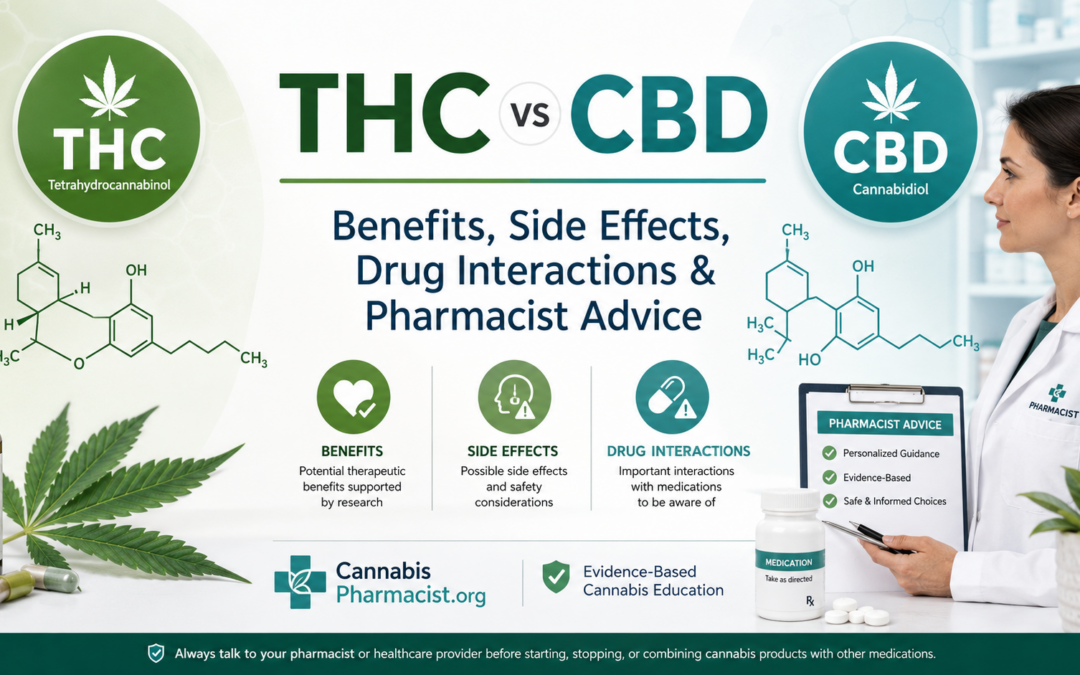
THC and CBD are two well-known cannabinoids, but they are not interchangeable. THC vs CBD involves important differences in intoxicating effects, potential benefits, side effects, medication interaction risks, product quality concerns, and legal status.
THC can cause impairment and a “high,” while CBD generally does not cause the same intoxicating effect. However, neither THC nor CBD should be considered risk-free. Both may cause side effects, may affect how some medicines work, and may require discussion with a pharmacist, physician, or qualified healthcare professional before use.
For patients, pharmacists, and healthcare professionals, the most useful question is not simply “Which is better?” A safer question is: “What does the evidence say, what medications are involved, what are the risks, and what professional guidance is needed?”
Key Takeaways
- THC and CBD are different cannabinoids with different effects and safety considerations.
- THC is associated with intoxicating and impairing effects; CBD generally does not produce the same “high.”
- Both THC and CBD may cause side effects and may interact with prescription medicines, over-the-counter products, supplements, alcohol, and other substances.
- Product quality, labeling accuracy, THC/CBD concentration, and legal requirements may vary by state, country, and product source.
- Patients should not start, stop, or adjust prescribed medication based on cannabis information alone.
- Pharmacist-led guidance can support safer medication review, patient counseling, product education, and risk communication.
What Is the Difference Between THC and CBD?
THC and CBD are cannabinoids, meaning they are naturally occurring compounds found in the cannabis plant. Although both are often discussed together, they can affect the body and mind differently.
What Is THC?
THC stands for tetrahydrocannabinol. It is the cannabinoid most commonly associated with cannabis intoxication, altered perception, impaired coordination, and changes in attention or reaction time.
THC effects may vary based on several factors, including:
- The amount consumed
- Product potency
- Route of administration
- Individual tolerance
- Age and health status
- Use of alcohol or other substances
- Current medications
- Whether THC is used alone or with CBD
THC may be discussed in the context of symptom management, but it is not appropriate for every person or every health situation. It may create additional concerns for people who drive, work in safety-sensitive jobs, have certain mental health conditions, take sedating medicines, or are managing multiple chronic conditions.
What Is CBD?
CBD stands for cannabidiol. Unlike THC, CBD does not typically cause the intoxicating “high” commonly associated with cannabis.
However, non-intoxicating does not mean risk-free. CBD may still affect alertness, digestion, appetite, liver-related safety monitoring in some circumstances, and the way certain medications are processed.
CBD products also vary widely. A product labeled “CBD” may differ in:
- Actual CBD concentration
- Presence or absence of THC
- Manufacturing quality
- Testing standards
- Product formulation
- Added ingredients
- Legal status in a specific location
This is why consumers and healthcare professionals should avoid assuming that all CBD products are equivalent.
THC vs CBD Comparison Table
| Topic | THC | CBD |
|---|---|---|
| Full name | Tetrahydrocannabinol | Cannabidiol |
| Intoxicating effect | Can cause a high and impairment | Does not typically cause a high |
| Common safety concern | Impaired reaction time, coordination, memory, anxiety, and driving risk | Drowsiness, digestive effects, medication interactions, and product-quality concerns |
| Medication review needed | Yes | Yes |
| Product variability | Can vary by potency and formulation | Can vary by concentration, purity, THC content, and labeling |
| Legal status | Varies by U.S. state and country | Varies by U.S. state, country, source, and product type |
THC vs CBD Effects: What Patients and Professionals Should Know
The effects of THC and CBD are not identical, and they are not predictable in the same way for every person. Two people using the same product may have different experiences because of age, metabolism, medical history, medication use, product type, and prior cannabis exposure.
THC Effects
THC may affect mood, perception, coordination, memory, attention, and reaction time. Some people may experience relaxation or symptom relief, while others may experience anxiety, discomfort, confusion, dizziness, or impaired coordination.
Potential THC-related concerns may include:
- Reduced reaction time
- Impaired judgment
- Difficulty concentrating
- Coordination changes
- Anxiety or panic in some individuals
- Increased sedation when combined with other sedating substances
- Increased risk during driving or machinery operation
People should not drive, operate machinery, or perform safety-sensitive work when impaired by THC.
CBD Effects
CBD does not typically produce the same intoxicating effect as THC. Still, CBD can have effects that matter clinically.
Potential CBD-related concerns may include:
- Drowsiness or fatigue
- Digestive symptoms
- Appetite changes
- Changes in alertness
- Medication interactions
- Product quality and labeling concerns
CBD may be especially important to review when a patient uses multiple prescription medicines or has a complex health history.
Why Route of Administration Matters
The route of administration can influence onset, duration, intensity, and predictability of THC or CBD effects.
Common routes include:
- Inhaled products
- Oral products
- Edibles
- Capsules
- Sublingual oils or tinctures
- Topical products
- Other regulated formulations where legally available
For example, orally consumed products may take longer to have noticeable effects than inhaled products. Delayed onset can lead some people to take more than intended before the first dose has fully taken effect. This can increase the chance of unwanted effects.
Patients should discuss product form, timing, and safety precautions with a qualified healthcare professional rather than relying only on online advice or product marketing.
THC and CBD Benefits: What Does the Evidence Support?
People often search for THC and CBD benefits because cannabis products are widely discussed for pain, anxiety, sleep, nausea, appetite, and other symptoms. However, research quality and clinical applicability vary greatly by product, cannabinoid, dose, route, condition, and patient population.
It is important to distinguish between:
- FDA-approved cannabinoid-based medicines for specific indications
- State-regulated medical cannabis programs
- Consumer CBD products
- Recreational cannabis products
- Products sold online with broad wellness claims
These are not interchangeable.
CBD vs THC for Medical Use
There is no one-size-fits-all answer to whether CBD or THC is “better” for medical use. A medication decision should consider the individual’s diagnosis, symptoms, treatment goals, current medicines, risk factors, and applicable laws.
In some situations, cannabinoid-based medicines may be discussed as part of a broader care plan. In other situations, the risks may outweigh potential benefits.
A responsible discussion should include:
- The quality of available evidence
- Potential side effects
- Drug interaction risks
- Risk of impairment
- Patient-specific health conditions
- Legal and regulatory requirements
- Whether alternative therapies should be considered
THC vs CBD for Pain
People commonly search for THC vs CBD for pain, but pain is not a single condition. Different types of pain may have different causes, treatment approaches, and evidence bases.
Before using THC or CBD for pain, patients should consider:
- The cause and duration of pain
- Current medications
- History of substance use disorder
- Mental health history
- Work and driving responsibilities
- Existing treatment plan
- Potential for sedation or impairment
Cannabis products should not automatically replace evidence-based pain care, prescribed treatment, physical therapy, mental health support, or medical evaluation when needed.
THC vs CBD for Anxiety
The topic of THC vs CBD for anxiety requires extra care. THC may worsen anxiety, panic, or discomfort in some individuals, particularly at higher exposure levels or in people who are sensitive to its effects.
CBD is often marketed for anxiety, but marketing claims should not be treated as a personal treatment plan. Anxiety can have many causes, and people may need clinical assessment, counseling, psychotherapy, medication review, or other evidence-based support.
Anyone with a history of severe anxiety, panic disorder, psychosis, bipolar disorder, substance use disorder, or complex psychiatric medication use should seek qualified medical guidance before considering THC or CBD.
CBD vs THC Side Effects and Safety Risks
The phrase CBD vs THC side effects is important because patients may assume that one cannabinoid is always safe and the other is always dangerous. In reality, both can create risks depending on the product, person, dose, route, and medication profile.
Common THC Side Effects
Potential THC-related side effects may include:
- Impairment
- Dizziness
- Dry mouth
- Altered perception
- Reduced coordination
- Anxiety or panic
- Sleepiness
- Short-term memory difficulties
- Increased heart-rate sensations
- Difficulty concentrating
Some effects may be more concerning for older adults, adolescents, people with mental health conditions, people taking sedating medicines, and individuals who must drive or operate machinery.
Common CBD Side Effects
Potential CBD-related side effects may include:
- Drowsiness
- Fatigue
- Diarrhea or digestive changes
- Appetite changes
- Changes in alertness
- Potential medication interaction concerns
- Product-quality uncertainty
CBD may be marketed as gentle or natural, but “natural” does not mean clinically appropriate, interaction-free, or safe for every person.
People Who May Need Extra Caution
Extra caution may be appropriate for:
- Pregnant or breastfeeding individuals
- Adolescents and young adults
- Older adults using multiple medications
- People with liver disease
- People with cardiovascular conditions
- People with seizure disorders
- People with a history of psychosis or severe mental illness
- People with substance use disorder concerns
- People who drive or work in safety-sensitive environments
THC vs CBD Drug Interactions: Why Medication Review Matters
THC vs CBD drug interactions are one of the most important reasons to involve a pharmacist or qualified healthcare professional.
THC and CBD may affect how some medications are processed, absorbed, or experienced. The risk may depend on the specific cannabinoid, formulation, dose, frequency of use, route of administration, patient age, liver function, and other medicines or substances involved.
A medication interaction may increase side effects, reduce effectiveness, increase sedation, or create other safety concerns.
Medication Categories That May Need Review
This is not a complete list, but additional review may be appropriate for people using:
- Blood thinners
- Anti-seizure medicines
- Sedatives or sleep medicines
- Opioid pain medicines
- Antidepressants
- Antipsychotics
- Blood pressure medicines
- Diabetes medicines
- Immunosuppressants
- Medicines with narrow therapeutic ranges
- Over-the-counter sleep aids
- Herbal products and supplements
People should not stop or change prescribed medications in order to use THC or CBD without speaking with the prescriber or pharmacist.
Alcohol, Supplements, and Other Substances Matter Too
Cannabis safety discussions should not focus only on prescription medications.
THC and CBD may also need review alongside:
- Alcohol
- Nicotine products
- Sedating supplements
- Herbal products
- Over-the-counter antihistamines
- Sleep aids
- Recreational substances
Combining multiple substances can make effects less predictable and may increase impairment or sedation.
Questions a Pharmacist May Ask
A pharmacist may ask questions such as:
- What prescription medicines do you take?
- What over-the-counter products, vitamins, or supplements do you use?
- Do you use alcohol, nicotine, or other substances?
- What health condition or symptom are you trying to address?
- Do you drive, work, or care for children?
- Have you experienced anxiety, dizziness, confusion, or unwanted effects with cannabis before?
- Are you pregnant, breastfeeding, or planning pregnancy?
- Do you have liver, heart, mental health, or seizure-related conditions?
These questions are not judgmental. They help identify potential risks and guide safer counseling.
Why THC vs CBD Matters in the United States
The United States has a complicated cannabis environment. Cannabis laws, medical programs, adult-use rules, product standards, qualifying conditions, dispensary regulations, and pharmacist involvement can vary substantially by state.
This means a product, service, or recommendation that is available in one state may not be lawful, regulated, or appropriate in another.
U.S. Patients Need Better Cannabis Education
Patients may encounter cannabis information through social media, dispensaries, friends, retail marketing, online blogs, and product advertisements. The quality of that information can vary widely.
Evidence-based cannabis education helps patients ask better questions:
- Is this product legal where I live?
- Does it contain THC?
- Could it affect my medication?
- Could it affect my ability to drive or work?
- Is the product independently tested?
- What should I discuss with my pharmacist or physician?
U.S. Pharmacists Need Cannabis Competency
Patients may ask pharmacists about THC, CBD, drug interactions, product labels, adverse effects, workplace concerns, and medication safety.
Pharmacists do not need to endorse every cannabis product to provide useful care. They can support patient safety by:
- Reviewing medication profiles
- Identifying potential interaction concerns
- Discussing impairment and driving risks
- Explaining product variability
- Encouraging evidence-based decision-making
- Referring patients when medical evaluation is needed
- Staying informed about applicable laws and professional standards
Worldwide Relevance: THC and CBD Safety Beyond the USA
THC and CBD discussions matter globally because cannabis laws, product access, medical frameworks, and pharmacy roles differ across countries.
A product that is legal in one country may be restricted, prohibited, prescribed differently, or regulated under another system elsewhere.
Why Global Healthcare Professionals Need a Safety Framework
Regardless of location, healthcare professionals can use a consistent safety framework:
- Review medication use
- Assess side-effect risks
- Consider impairment and driving concerns
- Discuss product quality
- Identify vulnerable populations
- Encourage patient-specific clinical review
- Check local legal and regulatory requirements
International Patient Considerations
Patients should be particularly cautious about:
- Traveling across borders with cannabis products
- Assuming CBD products are legal everywhere
- Workplace drug testing
- THC thresholds in local laws
- Differences in medical cannabis access
- Product labeling and quality standards
Common Myths and Mistakes About THC and CBD
Myth: CBD Is Always Safe Because It Does Not Cause a High
CBD may not be intoxicating in the same way as THC, but it can still cause side effects and may interact with medications.
Myth: THC and CBD Work the Same Way for Everyone
People respond differently based on health status, product type, route, dose, medication use, and previous cannabis exposure.
Myth: Natural Means Clinically Proven
A natural origin does not guarantee safety, quality, effectiveness, or suitability. Some products may be poorly labeled, inconsistently manufactured, or inappropriate for certain health conditions.
Mistake: Ignoring Prescription Medication Use
A person may assume CBD is separate from their medication regimen. In reality, cannabis products can be relevant to medication review, especially when multiple prescriptions, sedatives, seizure medicines, or blood thinners are involved.
Mistake: Relying Only on Social Media or Product Marketing
Marketing materials may not provide a complete safety picture. Patients should seek reliable education and professional guidance instead of relying solely on testimonials, influencers, or product claims.
When to Speak With a Cannabis Pharmacist or Healthcare Professional
Speak with a cannabis pharmacist, physician, or qualified healthcare professional before using THC or CBD if you:
- Take prescription medicines
- Use blood thinners, anti-seizure medication, sedatives, opioids, or psychiatric medication
- Have a chronic health condition
- Have liver, heart, seizure-related, or mental health concerns
- Are pregnant, breastfeeding, or planning pregnancy
- Have a history of psychosis, panic, substance use disorder, or severe anxiety
- Need to drive, operate machinery, or perform safety-sensitive work
- Have experienced concerning side effects from cannabis products
- Are unsure whether a product is legal, regulated, or appropriate in your location
How Cannabis Pharmacists Support Safer THC and CBD Decisions
Cannabis pharmacists bring medication expertise to cannabis conversations. Their role may include helping patients and professionals understand interactions, side effects, product differences, patient counseling needs, and safety considerations.
Medication Reconciliation and Interaction Awareness
A pharmacist can review:
- Prescription medicines
- Over-the-counter medicines
- Supplements
- Sedating products
- Alcohol use
- Other substances
- Previous cannabis experiences
- Patient-specific risk factors
This supports safer, more informed conversations.
Patient Counseling
A pharmacist may help explain:
- Why THC and CBD are not interchangeable
- How product form affects onset and duration
- Why product labels matter
- When impairment may be a concern
- Why medication changes should not be made independently
- When a patient should contact a physician or urgent care service
Professional Training and Continuing Education
Cannabis-related questions are increasing in pharmacy and healthcare settings. Pharmacists, students, and clinicians benefit from structured education that covers cannabinoid science, pharmacology, safety, interactions, patient counseling, legal awareness, and evidence appraisal.
Why Choose cannabispharmacist for Evidence-Based Cannabis Education
cannabispharmacist supports pharmacists, pharmacy students, healthcare professionals, and other professionals who need a more responsible and evidence-based approach to cannabis education.
The focus is not on hype or one-size-fits-all product claims. It is on learning how to evaluate evidence, recognize safety risks, understand medication interactions, communicate with patients, and apply legal and professional awareness.
Education opportunities may support:
- Cannabis pharmacy education
- Cannabis education for pharmacists
- Continuing education
- Medical cannabis safety learning
- Cannabis drug interaction awareness
- Patient counseling skills
- Pharmacy student development
- Professional membership and networking
- Clinical cannabinoid pharmacy training
Conclusion: THC vs CBD Requires Evidence-Based Guidance
THC vs CBD is not simply a question of which cannabinoid is stronger, safer, or better. THC and CBD differ in effects, side-effect profiles, impairment concerns, medication interaction risks, product variability, and legal considerations.
Patients should avoid treating online information or product marketing as a substitute for professional medical advice. Pharmacists and healthcare professionals can help assess medication risks, discuss patient-specific concerns, explain product differences, and support safer decisions.
For people comparing THC vs CBD, the most responsible next step is to seek evidence-based information and speak with a pharmacist, physician, or qualified healthcare professional before making medical decisions.
Learn From Evidence-Based Cannabis Pharmacy Education
For pharmacists, pharmacy students, healthcare professionals, and cannabis industry professionals, responsible cannabis knowledge requires more than product marketing or online trends.
Explore cannabispharmacist resources, professional membership, continuing education, cannabis pharmacy training, and evidence-based learning designed to support safer patient counseling and informed clinical practice.
Frequently Asked Questions
What is the difference between THC and CBD?
THC can cause intoxicating and impairing effects, while CBD generally does not cause the same high. Both may cause side effects and may interact with medications.
Does CBD get you high like THC?
CBD does not typically cause the intoxicating high associated with THC. However, CBD may still cause side effects, interact with medications, and vary in quality between products.
Is THC or CBD better for pain?
There is no universal answer. The right approach depends on the type of pain, current medications, health history, legal setting, and individual risk factors.
Can THC and CBD interact with prescription medications?
Yes. THC and CBD may affect how some medicines work or are processed. Patients should speak with a pharmacist or healthcare professional before combining cannabis products with medications.
Can THC make anxiety worse?
THC may worsen anxiety, panic, or discomfort in some people. Individuals with mental health concerns should discuss cannabis use with a qualified healthcare professional.
Is CBD safer than THC?
CBD is generally non-intoxicating, but it is not risk-free. It may cause side effects, interact with medicines, and vary in purity or labeling accuracy.
Should pharmacists counsel patients about THC and CBD?
Yes. Pharmacists can help identify medication interactions, discuss side effects, explain impairment risks, review product concerns, and support evidence-based patient counseling.
Are THC and CBD legal everywhere?
No. Laws vary by U.S. state and country. Product legality, THC limits, medical access, and dispensing rules differ by location.
Can I use CBD with alcohol?
Combining CBD with alcohol may increase drowsiness, impairment, or unpredictability. People should discuss this with a pharmacist or qualified healthcare professional.
When should I speak with a cannabis pharmacist?
Speak with a cannabis pharmacist if you take prescription medicines, have chronic conditions, are pregnant or breastfeeding, have mental health concerns, or are unsure about product safety or interactions.