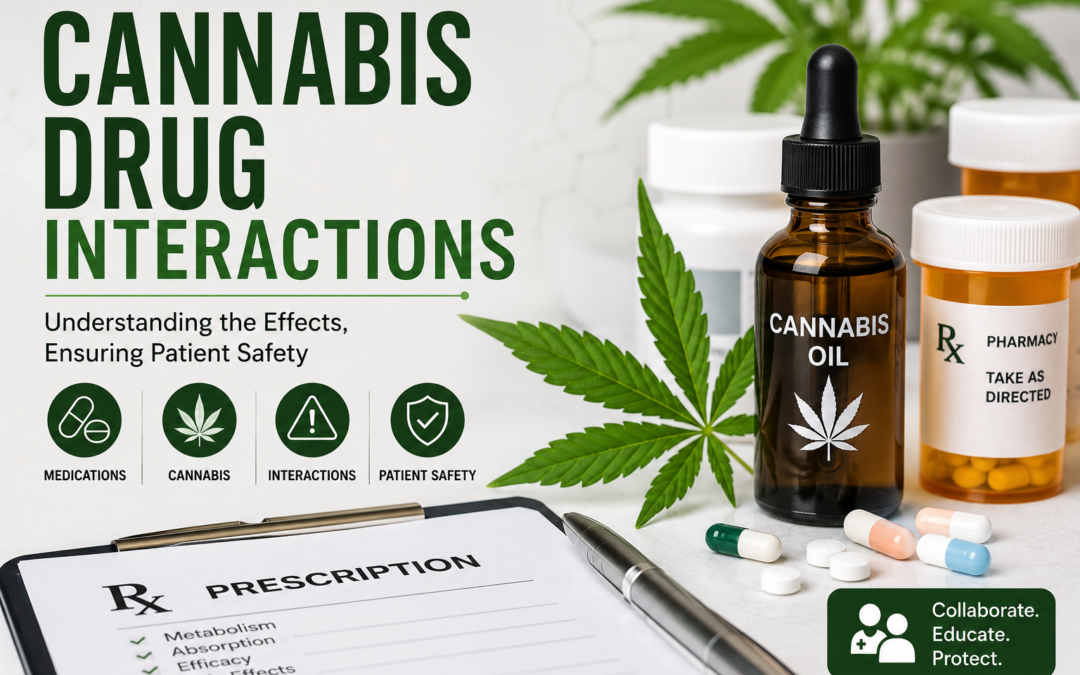
Cannabis drug interactions can happen when THC, CBD, or other cannabis compounds affect how the body processes medications or how medications affect the body. These interactions may change medication levels, increase side effects, or reduce treatment safety.
Patients using cannabis with prescription drugs should speak with a pharmacist, physician, or qualified healthcare professional before making medical decisions. This is especially important for people taking blood thinners, antidepressants, seizure medications, sedatives, heart medicines, transplant medicines, or multiple medications.
Cannabis is now used by many people for medical, wellness, or adult-use purposes. Some patients use cannabis under a state medical cannabis program. Others use CBD products, hemp-derived products, THC products, edibles, tinctures, oils, or vape products without telling their healthcare team.
This matters because cannabis medication interactions can occur with prescription medicines, over-the-counter products, supplements, alcohol, and other substances. For patients, the main message is simple: cannabis is not automatically safe just because it is legal, natural, or widely available.
For pharmacists and healthcare professionals, cannabis and prescription drug interactions are an important patient counseling topic. For pharmacy students and cannabis industry professionals, understanding medical cannabis drug interactions is part of responsible, evidence-based cannabis education.
Cannabis Drug Interactions in Simple Terms
Cannabis is not risk-free. THC and CBD may interact with prescription medications, over-the-counter drugs, supplements, and alcohol.
CBD drug interactions may involve liver enzymes that help process many medicines. THC drug interactions may involve sedation, dizziness, anxiety, faster heart rate, impaired coordination, or additive side effects.
Higher-risk medication groups may include:
Blood thinners
Antidepressants
Seizure medications
Sedatives and sleep medicines
Opioids
Heart medicines
Blood pressure medicines
Transplant medicines
Medicines with narrow safety margins
A cannabis drug interactions checker can be a helpful starting point, but it should not replace pharmacist or clinician review. A cannabis drug interaction pharmacist can help patients understand possible risks and safer next steps.
What Are Cannabis Drug Interactions?
Cannabis drug interactions happen when cannabis changes how another medication works in the body. This may involve THC, CBD, other cannabinoids, terpenes, or cannabis product additives.
The interaction may increase side effects, change medication levels, or make treatment less predictable.
For example, a patient may use a sedating cannabis product while also taking a sleep medication. Both may cause drowsiness. Together, they may increase the risk of dizziness, falls, poor coordination, or unsafe driving.
Another example is a patient taking medication that needs careful blood-level monitoring. If cannabis changes how that medicine is processed, the medication effect may become stronger or weaker than expected.
Simple Definition of Cannabis Medication Interactions
A cannabis medication interaction means cannabis affects the safety, side effects, metabolism, or clinical effect of another drug.
This can happen with:
Prescription medications
Over-the-counter medicines
Supplements
Herbal products
Alcohol
Other substances
This does not mean every cannabis product will interact with every medication. It means cannabis use should be included in medication review, especially when a person takes multiple medicines or has a serious medical condition.
Pharmacokinetic vs Pharmacodynamic Cannabis Interactions
Cannabis medication interactions are often explained in two main ways: pharmacokinetic interactions and pharmacodynamic interactions.
Pharmacokinetic Interactions
Pharmacokinetic interactions happen when cannabis affects how the body absorbs, breaks down, or clears a medication.
Many medicines are processed by liver enzymes. CBD and THC may affect some of these enzyme pathways, which can change medication levels in the body. This may increase side effects or reduce treatment predictability.
Pharmacodynamic Interactions
Pharmacodynamic interactions happen when cannabis adds to or changes the effect of another drug.
For example, cannabis may add to drowsiness when combined with sedatives, alcohol, opioids, or sleep medications. It may also affect mood, heart rate, blood pressure, attention, or coordination in some people.
Why THC and CBD May Interact Differently
THC and CBD are not the same. They may affect the body differently and may create different medication safety concerns.
THC Drug Interactions
THC is the main psychoactive cannabinoid in cannabis. It may cause a “high,” but it may also cause dizziness, sedation, anxiety, faster heart rate, impaired coordination, or changes in attention.
These effects may be more concerning when THC is combined with medicines that affect the brain, heart, sleep, mood, or balance.
Patients should be careful with high-THC products, especially if they take sedatives, sleep medicines, opioids, antidepressants, anti-anxiety medicines, or heart-related medications.
CBD Drug Interactions
CBD does not cause the same psychoactive high as THC, but CBD is not risk-free. CBD may still cause side effects and may interact with some medicines, especially drugs processed through liver enzyme systems.
CBD drug interactions may matter for some seizure medications, antidepressants, blood thinners, pain medications, and other drugs.
Patients using CBD with prescription medications should include CBD on their medication list, even if the product was purchased online, at a wellness store, or without a prescription.
CBD and THC Together
Many cannabis products contain both CBD and THC. The effects may vary depending on the ratio, dose, product type, route of use, and patient tolerance.
A product labeled as “CBD” may still contain small amounts of THC, depending on the product type and regulations. A product with both CBD and THC may have a different interaction profile than CBD alone or THC alone.
Patients should read labels carefully and avoid assuming that all cannabis products are the same.
How Cannabis May Interact With Prescription Medications
Cannabis and prescription drug interactions can be simple or complex. The risk depends on the person, the medication, the cannabis product, the route of use, the dose, and how often cannabis is used.
A patient taking one low-risk medication may have a different risk profile than a patient taking blood thinners, antidepressants, seizure medications, transplant medications, sleep medications, or heart medicines.
This is why patient-specific review is important.
Cannabis and Prescription Drug Interactions
Prescription medications can have different safety margins. Some medicines are more forgiving if levels vary slightly. Others require stable blood levels.
Medicines that require careful monitoring are sometimes called narrow therapeutic index medicines. Small changes in drug levels may matter clinically.
Cannabis may also increase side effects in some patients. For example, a person taking anxiety medication, sleep medication, or opioid pain medication may experience more sedation if cannabis is added.
A person taking heart or blood pressure medication may need extra caution with products that affect heart rate or blood pressure.
Patients should not stop, start, or change prescribed medications because of cannabis use without speaking with a prescriber or pharmacist.
Cannabis CYP450 Drug Interactions
The CYP450 enzyme system helps the body process many medications. Some cannabinoids, especially CBD, may affect certain CYP enzymes. This is one reason cannabis CYP450 drug interactions are often discussed in clinical cannabis education.
In simple terms, if a drug is normally broken down by a specific liver enzyme, and cannabis affects that same pathway, the drug level may change. This could increase side effects or reduce effectiveness.
The clinical importance depends on:
The medication
The dose
The patient’s health status
The cannabis product used
The route of use
How often cannabis is used
Whether the patient takes other medications
This is one reason pharmacists are important in cannabis care. Pharmacists are trained to review medication lists, identify possible drug interactions, and explain risks in patient-friendly language.
Why Dose, Product Type, and Route Matter
Not all cannabis products behave the same way.
Smoking or vaping cannabis may act quickly, but inhaled products can still affect coordination, attention, and judgment. Edibles may take longer to start working and may last longer. Oils, tinctures, capsules, and concentrates can differ greatly in strength and onset time.
Higher-THC products may create a greater risk of impairment, anxiety, dizziness, or sedation. Higher-dose CBD products may carry more concern for liver enzyme interactions.
Product labeling may also vary, and some products may not contain exactly what the label says. This is why patients should be careful with product selection and should speak with a qualified professional when using cannabis with medications.
Common Medication Groups That May Raise Concern
There is no universal complete cannabis drug interactions list that applies to every patient. However, some medication groups deserve extra caution.
Cannabis and Blood Thinner Interactions
Cannabis and blood thinner interactions are important because some anticoagulants require careful monitoring.
Warfarin is often discussed because its effect can be monitored through INR testing, and case reports have raised concern about possible cannabinoid interaction.
Patients taking warfarin or other anticoagulants should speak with their pharmacist or prescriber before starting cannabis, CBD, THC, or changing cannabis use patterns.
Sudden changes in cannabis use may matter if a medication requires stable monitoring.
Cannabis Interactions With Antidepressants
Cannabis interactions with antidepressants may involve mood, sedation, anxiety, sleep, heart rhythm, or drug metabolism.
Some patients use cannabis because they feel anxious, depressed, or unable to sleep. However, self-managing mental health symptoms with cannabis may create risks, especially with high-THC products or when prescription antidepressants are involved.
Patients taking antidepressants should speak with a pharmacist, physician, or mental health professional before using cannabis for mood, stress, or sleep.
Cannabis should not replace prescribed mental health treatment without professional guidance.
Cannabis and Seizure Medications
CBD has known clinical relevance in some seizure-related contexts, but this does not mean all CBD products are safe for all seizure patients.
FDA-approved prescription cannabidiol is different from over-the-counter CBD products. Some seizure medications may have interaction concerns with cannabinoids.
Patients with epilepsy or seizure disorders should use cannabis-related products only under professional supervision.
Cannabis and Sedatives, Sleep Medications, or Alcohol
Cannabis may increase sedation when combined with sedatives, sleep medications, opioids, anxiety medications, muscle relaxers, or alcohol.
This may increase the risk of:
Drowsiness
Confusion
Falls
Impaired driving
Poor coordination
Accidents
This is especially important for older adults, people with balance problems, people taking multiple medications, and anyone who drives or operates equipment.
Cannabis and Heart or Blood Pressure Medications
THC may affect heart rate or blood pressure in some people. Patients with cardiovascular disease, blood pressure concerns, or heart rhythm issues should be careful with cannabis, especially high-THC products.
Anyone who experiences chest pain, fainting, severe dizziness, severe anxiety, or concerning heart symptoms after cannabis use should seek urgent medical help.
Cannabis and Transplant or Immune-Suppressing Medications
Some transplant and immune-suppressing medications require careful blood-level monitoring.
Tacrolimus and other transplant-related medicines may be discussed in cannabis drug interaction literature. Patients who have had an organ transplant or who take immune-suppressing medications should speak with their transplant team before using cannabis or CBD products.
What Medications Should Not Be Taken With Cannabis?
There is no single universal list of medications that every person must avoid with cannabis. However, some medication groups require extra caution.
Patients should speak with a pharmacist or healthcare professional if they take:
Blood thinners
Antidepressants
Anti-anxiety medications
Sleep medications
Opioids
Seizure medications
Heart medications
Blood pressure medications
Transplant medications
Liver-metabolized medications
Multiple prescription medicines
Any medicine with a narrow therapeutic index
This section should not replace medical advice. The safest option is to review all medications, supplements, and cannabis products with a pharmacist or qualified healthcare professional.
Can Cannabis Interact With Prescription Medications?
Yes. Cannabis can interact with prescription medications. THC and CBD may affect side effects, medication levels, sedation, bleeding risk, liver metabolism, mood, coordination, or treatment safety.
The risk depends on the patient, medication list, cannabis product, dose, route, and frequency of use.
Patients should tell their pharmacist and prescriber about cannabis use, including CBD, THC, hemp products, medical cannabis products, edibles, oils, tinctures, vapes, and concentrates.
This helps the healthcare team provide safer advice.
Cannabis Drug Interactions Checker: What Patients Should Know
A cannabis drug interactions checker may help identify possible risks. But online tools should be treated as a starting point, not a final answer.
Why Online Checkers Are Helpful but Limited
Online drug interaction tools may not include every cannabis product, dose, route, patient condition, or product label difference.
They may also give general information that does not fully apply to an individual patient.
A pharmacist can interpret risk more carefully because they can review the full medication list, medical history, age, allergies, liver or kidney issues, pregnancy status, and treatment goals.
What Information Patients Should Prepare
Before speaking with a pharmacist or healthcare professional, patients should prepare:
All prescription medications
Over-the-counter medicines
Vitamins and supplements
Herbal products
Cannabis product name
THC and CBD amount
Route of use
Dose and frequency
Reason for cannabis use
Medical conditions
Pregnancy or breastfeeding status
History of liver, heart, kidney, mental health, or seizure conditions
Any side effects noticed after cannabis use
This information helps the pharmacist provide safer, more useful guidance.
Practical Cannabis Medication Safety Checklist
| Safety Step | Why It Matters |
|---|---|
| Tell your pharmacist if you use THC, CBD, hemp, or medical cannabis | Cannabis may affect medication safety and side effects |
| Keep an updated medication list | Helps identify cannabis medication interactions |
| Avoid mixing cannabis with sedatives or alcohol without guidance | May increase drowsiness and impairment |
| Be careful with blood thinners and seizure medications | Some medicines require closer monitoring |
| Read product labels carefully | THC/CBD content and product quality may vary |
| Do not assume CBD is risk-free | CBD may still interact with medications |
| Avoid driving after THC use | THC may impair coordination and reaction time |
| Store cannabis away from children and pets | Accidental exposure can be dangerous |
| Follow state and country laws | Cannabis rules vary widely |
| Speak with a professional before starting cannabis | Prevention is safer than reacting after side effects |
Why Cannabis Drug Interactions Matter in the United States
In the United States, cannabis laws vary by state. Some states allow medical cannabis, some allow adult-use cannabis, and others have more limited programs. Federal, state, and local rules may not always align.
This creates confusion for patients. A person may assume that if cannabis is legal in their state, it must be medically safe for them. But legal access and medical safety are different questions.
U.S. patients may also use many types of products together, including prescription drugs, over-the-counter medicines, supplements, CBD products, hemp-derived products, and THC products.
Because pharmacists are medication experts, pharmacist-led cannabis safety guidance is especially important in the U.S. healthcare setting.
Worldwide Relevance: Why This Topic Matters Globally
Cannabis laws differ around the world. Some countries allow medical cannabis, some allow limited cannabinoid products, and others restrict cannabis use.
Product quality, labeling, pharmacist involvement, and healthcare guidance may also vary by country.
This is why worldwide cannabis education must be careful, evidence-based, and legally aware. Patients need clear safety information. Pharmacists and healthcare professionals need reliable training. Cannabis industry professionals need to understand that patient safety is part of responsible cannabis practice.
Cannabis pharmacy education can support safer patient counseling globally by helping professionals understand cannabinoids, drug interactions, product differences, patient risk factors, and evidence-based guidance.
Common Myths About Cannabis Drug Interactions
Myth 1: Natural Means Safe
Natural products can still cause side effects and drug interactions. Cannabis comes from a plant, but THC, CBD, and other compounds can still affect the body in powerful ways.
Myth 2: CBD Has No Drug Interactions
CBD may interact with some medications and should not be treated as risk-free. Patients should include CBD products on their medication list.
Myth 3: Cannabis Is Safe With All Prescription Medications
Cannabis is not automatically safe with every medicine. Some combinations may increase sedation, bleeding risk, medication level changes, or other concerns.
Myth 4: If Cannabis Is Legal, It Is Always Medically Safe
Legal status does not mean cannabis is appropriate for every patient. Medical safety depends on health history, medication list, cannabis product, dose, route, and patient-specific risk.
Myth 5: Online Advice Can Replace a Pharmacist
Online information can support education, but it cannot replace a pharmacist who can review a patient’s full medication list and health background.
Role of Cannabis Pharmacists in Drug Interaction Safety
A cannabis drug interaction pharmacist can help patients and healthcare teams understand cannabis-related medication risks.
This role is especially important because cannabis products vary widely, and many patients may not know how to discuss cannabis use with their healthcare team.
What Is a Cannabis Drug Interaction Pharmacist?
A cannabis drug interaction pharmacist is a licensed pharmacist with specialized knowledge of cannabis, cannabinoids, medications, drug interactions, patient counseling, and cannabis safety.
This does not mean the pharmacist replaces the patient’s physician. Instead, the pharmacist supports safer medication use by helping patients and providers understand possible interaction concerns.
How Pharmacists Support Patients
Pharmacists may support patients by helping with:
Medication review
Cannabis interaction screening
THC and CBD safety counseling
Product education
Side effect awareness
Questions to ask prescribers
Referral to physicians or specialists when needed
Education on responsible use and legal considerations
How Pharmacists Support Healthcare Professionals
Pharmacists may support healthcare professionals through:
Evidence-based education
Cannabis pharmacology training
Clinical resources
Drug interaction guidance
Patient counseling tools
Professional collaboration
Continuing education and cannabis pharmacy training
Cannabis Pharmacy Education and Professional Training
Cannabis education for pharmacists is important because patients increasingly ask about cannabis, CBD, THC, dosing, side effects, and interactions.
Pharmacy students and healthcare professionals need clear training in cannabis science, patient counseling, legal awareness, and medication safety.
cannabispharmacist supports professional learning through cannabis pharmacy education, cannabis pharmacist training, medical cannabis education, professional membership, continuing education, certification support, and evidence-based cannabis resources.
For pharmacists and pharmacy students, cannabis education is not only about knowing cannabis benefits. It is also about understanding risks, product differences, drug interactions, patient communication, and safe referral practices.
When to Speak With a Cannabis Pharmacist or Healthcare Professional
Patients should speak with a pharmacist, physician, or qualified healthcare professional if they:
Take blood thinners
Take seizure medications
Take antidepressants or mental health medications
Take sedatives, opioids, or sleep medications
Take transplant medications
Have liver, kidney, heart, seizure, or mental health conditions
Are pregnant or breastfeeding
Are elderly or medically fragile
Use multiple medications
Plan to start CBD, THC, hemp, or medical cannabis
Notice new side effects after using cannabis
Want to stop or change prescription medications because of cannabis use
Patients should not stop prescription medications without professional guidance.
Why Choose cannabispharmacist for Evidence-Based Cannabis Education
cannabispharmacist is focused on cannabis pharmacy education, cannabis pharmacist training, medical cannabis education, pharmacist-led cannabis safety guidance, professional membership, continuing education, certification support, and evidence-based cannabis resources.
The organization supports pharmacists, pharmacy students, healthcare professionals, medical cannabis patients, cannabis industry professionals, and people seeking reliable cannabis safety information.
For a topic like cannabis drug interactions, this matters. Patients need simple explanations. Pharmacists need clinical education. Pharmacy students need professional development. Healthcare professionals need reliable cannabis resources. Cannabis industry professionals need to understand safety and responsible communication.
cannabispharmacist helps connect cannabis science with practical education, patient counseling, and safer medication discussions.
Author and Reviewer Note
Suggested author/reviewer note for EEAT:
Written for educational purposes and reviewed by a pharmacist, cannabis education professional, or qualified healthcare content reviewer before publication.
Final Thoughts on Cannabis Drug Interactions
Cannabis drug interactions are important for patients, pharmacists, and healthcare professionals. THC and CBD may interact with prescription medications, over-the-counter drugs, supplements, alcohol, and other substances.
Patients should not assume cannabis is risk-free or safe with every medication. The safest approach is to speak openly with a pharmacist, physician, or qualified healthcare professional before using cannabis with medications.
Pharmacist-led education can help improve medication safety, patient counseling, and evidence-based cannabis care.
Ready to Learn More About Cannabis Medication Safety?
Explore cannabispharmacist for evidence-based cannabis pharmacy education, professional resources, cannabis drug interaction awareness, and pharmacist-led guidance designed to support safer cannabis care in the USA and worldwide.
Suggested CTA buttons:
Explore Cannabis Pharmacy Education
Learn About Cannabis Drug Interactions
Start Evidence-Based Cannabis Training
Access Professional Cannabis Resources
FAQs
What are cannabis drug interactions?
Cannabis drug interactions happen when THC, CBD, or other cannabis compounds affect how another medication works, how it is processed, or how side effects appear.
Can cannabis interact with prescription medications?
Yes. Cannabis may interact with prescription medications, including some blood thinners, antidepressants, seizure medicines, sedatives, heart medicines, and transplant medications.
What medications should not be taken with cannabis?
There is no single list for everyone, but patients taking blood thinners, seizure medications, sedatives, antidepressants, opioids, transplant medications, or multiple prescriptions should speak with a pharmacist or healthcare professional before using cannabis.
Can CBD interact with medications?
Yes. CBD may interact with some medications, especially medicines processed through liver enzymes, so patients should review CBD use with a pharmacist or qualified healthcare professional.
Can THC interact with medications?
Yes. THC may increase sedation, dizziness, anxiety, impaired coordination, or other side effects when combined with certain medications or alcohol.
Should I use a cannabis drug interactions checker?
A cannabis drug interactions checker can be helpful as a starting point, but it should not replace a pharmacist or healthcare professional who can review your full medication list and health history.
Why should I tell my pharmacist about cannabis use?
You should tell your pharmacist because cannabis may affect medication safety, side effects, drug levels, and treatment outcomes.
Is cannabis safe if it is legal in my state or country?
Not always. Legal access does not mean cannabis is safe for every person or every medication combination.
Can I stop my prescription medication if cannabis helps me feel better?
No. Patients should not stop or change prescription medications without speaking with their prescriber or pharmacist.
Who should be extra careful with cannabis and medications?
People taking multiple medications, blood thinners, seizure medicines, sedatives, antidepressants, transplant medicines, or heart medications should seek professional guidance before using cannabis.